Vice President for Research & Creative Scholarship
Glimpse is distributed via email to campus units, and is designed to increase the exchange of information and awareness regarding research, creative scholarship, and entrepreneurship & economic development. Send suggestions for Glimpse to vpr@umontana.edu
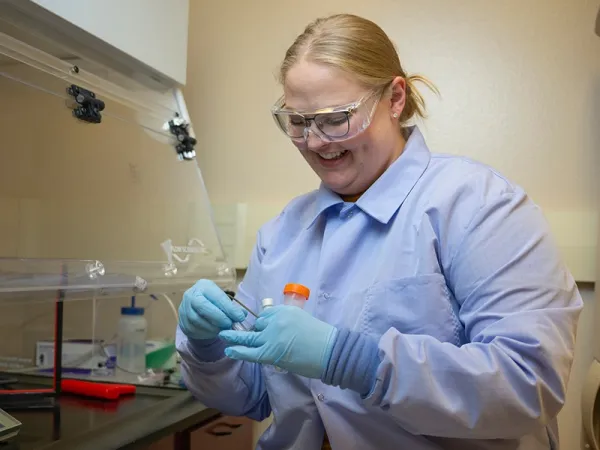
Associate Professor Lilian Calderon-Garciduenas, MD PhD, in the Department of Biomedical and Pharmaceutical Sciences researches the chronic health effects of exposure to air pollutants - both indoors and outdoors - in clinically healthy children.
Such exposure may contribute to systemic and brain inflammation, and manifest in Alzheimer- and Parkinson-type diseases. Working with children in Mexico City, Dr. Calderon-Garciduenas and her team have found that broccoli and dark chocolate may help ameliorate the inflammation and neurodegenerative process of oxidative stress in highly exposed children.
For more information about UM's Department of Biomedical and Pharmaceutical Sciences, see http://biomed.health.umt.edu/
![]() |
Dr. Timothy Conley of UM’s School of Social Work researches and evaluates societal management strategies with youth offenders, corrections, and addictions. The Montana Office of Court Administrator is interested in the impacts of community service sentencing on probationary Montana youth, and the Montana Department of Corrections seeks evaluation of a relatively new prison probation program. In 2011, Conley provided a report to the Montana State Legislature on DUI law reform and he is working a book tentatively titled, The Deadliest Road: Driving Under the Influence in Montana. For more information about Dr. Conley, see http://socialwork.health.umt.edu/users/timothyconley. |
The Maureen and Mike Mansfield Center needs U.S. participants for a new economic exchange project. UM faculty involved so far include Jill Belsky from the College of Forestry and Conservation and Josh Slotnick from Environmental Studies. For more information on this and other grants, visit www.umt.edu/mansfield.
The Maureen and Mike Mansfield Center promotes mutual understanding with Asia and ethics in public affairs. The center is funded primarily with grant dollars, and projects are designed in accordance with President Royce Engstrom's internationalization efforts to incorporate a broad segment of the community. Among the center's primary funders is the U.S. Department of State. These grants are funded under the Fulbright Hayes Act and are designed to increase mutual understanding between the people of the United States and the people of other countries by means of educational and cultural exchange.
Since 2009, the Mansfield Center has competed successfully for eight grants from this federal agency, ranging from $100,000 to nearly half a million dollars each. Academic youth grants have funded UM student programs to study climate change in Vietnam and secondary student study of environmental issues in Cambodia. Most grants support a two-way exchange of professionals between Asia and the U.S. in such areas as natural resources, economic empowerment and women's empowerment. Most recently, the $400,000 women's empowerment grant supported professional development and travel to Southeast Asia by a cross section of UM faculty and staff, including Chris Fiore, Lucy France, Tammy Freimund, Marilyn Marler and Linda Henderson.
"The Center is pleased to serve as a key part of the UM community through its grant-making efforts," Associate Director Deena Mansour said. "We are here to serve the campus and maximize engagement with Asia, and we welcome faculty, staff and student ideas for new grant-funded initiatives."
The University of Montana is hosting its first Marie Curie Research Fellow, Robert Pal of the University of Pecs, Hungary. Working closely with Professor Ragan Callaway of the Division of Biological Sciences, Dr. Pal is studying a native North American wildflower species – Giant Goldenrod – that has become highly invasive in Europe, causing environmental and economic problems.
A program of the European Commission to advance research and innovation, the Marie Curie Research Fellowship Programme promotes excellence and innovation in Europe by providing experience abroad and in the private sector.
For more information about Marie Curie Actions, see http://ec.europa.eu/research/mariecurieactions. For more about UM’s Division of Biological Sciences, see http://dbs.umt.edu/.
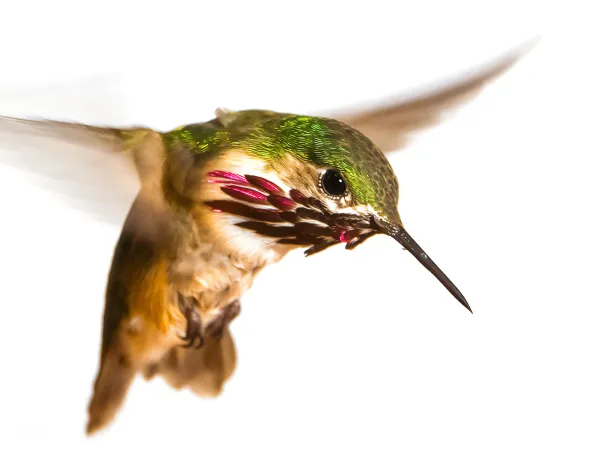
Bryce Maxell, senior zoologist with UM's Montana Natural Heritage Program, received this year's award for Wildlife Biologist of the Year from the Montana Chapter of the Wildlife Society at its annual meeting in Whitefish last week.
This award honors an individual's professional excellence, recognizes outstanding achievement, and highlights contributions to wildlife science and management.
The Montana Natural Heritage Program makes available to the public a variety of information, such as the Montana Field Guide, Checklist of the Birds of Montana, information about animals - plants - wetlands, and more. See http://mtnhp.org/
Professor Dan Pletscher, director of UM's Wildlife Biology Program for nearly 20 years, recently received the Distinguished Service Award from the Montana Chapter of the Wildlife Society.
This award recognizes an individual's cumulative, past, current and/or continuing achievements in wildlife conservation.
For more information about UM's Wildlife Biology Program, see http://www.cfc.umt.edu/wbio/
University of Montana Research Scientist Erin Sexton recently was awarded the 2012 Conservation Achievement Award. At its Feb. 7 annual meeting, The Montana Chapter of the American Fisheries Society presented the highly coveted award to Sexton for her work in developing a long-term solution in protecting the Flathead Basin ecosystem.
Sexton served as the transboundary coordinator for the state of Montana and is a research scientist at UM's Flathead Lake Biological Station. During the past 10 years, Sexton has been a leader in protecting the international Flathead River for generations to come.
The Flathead River, which originates in British Columbia, Canada, and flows into Montana, is considered one of America's wildest rivers due to its pristine water quality and abundant, diverse aquatic and terrestrial life. However, since the mid-1970s the headwaters of the Flathead have been threatened by British Columbia's plans to strip mine for coal, and in 2007 British Petroleum announced plans for coal-bed methane development in the basin.
According to Richard Hauer, professor of limnology at FLBS and director of UM's Institute on Ecosystems, Sexton's swift response successfully prevented these plans from coming to fruition. The success was in large part due to her efforts to coordinate and develop a solid foundation of science to inform management and conservation professionals of the shared aquatic resources in the Flathead.
"Erin has shown exemplary vision in her commitment to developing a long-term solution on the Flathead," said Hauer. "She has remained resolute in her commitment to link the scientific results with management and policy."
On Feb. 18, 2010, Premier Gordon Campbell of British Columbia and then Gov. Brian Schweitzer signed an unprecedented accord to prohibit coal mining, coal-bed methane extraction, and gas and oil exploration and development in the Transboundary Flathead River Basin.
"Without Erin's efforts, we believe this landmark conservation achievement would not have been realized," said Clint Muhlfeld, research ecologist and faculty affiliate at FLBS and senior scientist with the United States Geological Society.
Sexton graduated from UM in 2002 with a master's in environmental studies with a science emphasis. For more information about Flathead Lake Biological Station, see http://www2.umt.edu/flbs/.
Rick van den Pol, Director and Principal Investigator, IERS and tenured professor in the departments of Curriculum & Instruction and Psychology was appointed this week to the Steering Committee of the National Child Traumatic Stress Network. The Appointment Committee includes the Director of the National Center for Child Traumatic Stress at Duke University, the Director of the Center for Mental Health Services in the Substance Abuse and Mental Health Services of the Department of Health and Human Services, and other federal and Network officials. Their charge is to create policy, provide feedback on the extent to which the Network is fulfilling its mission, suggests new directions in national research, and serve as liaisons with the 79 currently funded trauma centers in the United States.
The Montana Center for the Investigation and Treatment of Childhood Trauma, established by The University of Montana, provided crisis response, trauma intervention, and PTSD management to Native American children, chiefly through working in schools. In partnership with expert researchers, tribal leaders, and school clinicians, the Montana Center adapted the Cognitive Behavioral Intervention for Children in Schools (CBITS) intervention model to be culturally responsive to the Native American children on the Rocky Boy reservation in Montana, and then spread this intervention to other reservations.
The Trauma Center was competitively refunded in fall 2012. It now has strategic partnerships with the Indian Health Service and the Bureau of Indian Affairs in addition to schools throughout Indian Country. It serves as a national leader in the dissemination and evaluation of culturally adapted, evidence-based trauma treatment for American Indian and Alaska Native (AI/AN) children, particularly in reservation schools. Types of trauma to be addressed include exposure to violence, natural disasters, accidents, family violence, sexual assault, childhood sexual abuse, child maltreatment, bullying, and symptoms of traumatic loss and grief. Center staff will adapt and disseminate six interventions that focus on child traumatic stress, traumatic grief, psychological first aid, suicide prevention, and community policing. Staff are also adapting and disseminating six promising treatments, three of which have already been used successfully with AI/AN children and youth. Plans include implementing programs on nineteen reservations in six states.
For more information, visit: http://iers.umt.edu/National_Native_Childrens_Trauma_Center/default.php
Office of the Vice President
Research & Creative Scholarship
University Hall 116
(406) 243-6670
Fax: (406) 243-6330